Skip to content

Open Days | March 12 (Thu), 13 (Fri), 14 (Sat) 11:00-16:00

We send our email letter, “One Basket Letter”. Subscribers receive 10% off as a small thank-you.

かご・ざる・み 市川籠店公式オンラインショップ ワンバスケタリー 1basketry onlineshop / Ichikawa Basketry Store TOKYO

実店舗営業 毎週木、金、土曜日 (月1回日曜日も営業)/ 11:00 - 16:00 卸取引について

Physical shop Open every Thursday, Friday and Saturday (also open on Sunday once a month) / 11:00am - 16:00pm About Wholesale

市川籠店 | 1basketry

MENU
  • 検索
  • ログイン
  • カート

市川籠店 | 1basketry

市川籠店公式オンラインショップ --1basketry-- 1basketry onlineshop / Ichikawa Basketry Store TOKYO

実店舗営業 毎週木、金、土曜日 (月1回日曜日も営業)/ 11:00 - 16:00

Physical shop Open every Thursday, Friday and Saturday
(also open on Sunday once a month) / 11:00am - 16:00pm

  • Care Guide
  • About Us
  • Our History
  • Journal
  • Gallery
  • Reviews
  • Access
  • Contact
  • Wholesale
  • 検索
  • ログイン
  • カート
  • Categories
    • Baskets
      • All
      • Organizer & Storage baskets
      • Dish & Cup baskets
      • Fruit, Sweets & Bread Baskets
      • Lunch & Accessory Baskets
      • Flower & Waste Baskets
      • Backpacks, Carry & Fish Baskets
    • Strainers, Colanders & Trays
      • All
      • Noodles, Rice Balls & Bread Plates
      • Colanders & Strainers
      • Drying baskets
      • Winnowing baskets
    • Hand bags & Handle baskets
      • All
      • Bamboo basket bags
      • Akebi basket bags
      • Krajood basket bags
      • Willow basket bags
    • Steamers, Rice Containers & Wooden Tubs
      • All
    • Table Cutlery & Kitchen Tools
      • All
      • Cutlery
      • Kitchen tools
      • Plates & Trays
      • Cups & Pitchers
      • Coffee drippers
    • Pot Mats, Coasters & Table Mats
      • All
    • Brooms & Scrubbing Brushes
      • All
      • Brooms & Dustpans
      • Scrubbing brushes
    • Jewelry & Accessories
      • All
      • Jewelry & Ornaments
      • Haberdashery, Stationery, Toys & Dolls
      • Art & Decorative Objects
      • Materials
    • Hats, Slippers & Sandals
      • All
    • For Professional Use & Extra Large Size
      • All
    • Textiles & Fabric
      • All
      • Towels
      • Aprons
      • Stoles & Shawls
      • Bags & Drawstring Bags
    • Antiques
      • All
    • “The One Table” – Baskets and Gara-bou Spun Cotton Stoles –
    • [2025 Sales Closed] Shimekazari 2025-26
      • All
  • Japanese Crafts
    • Japanese Crafts All
    • Tōhoku region
      • All
      • Iwate
      • Akita
      • Yamagata
      • Miyagi
      • Fukushima
    • Around Tokyo
      • All
      • Ibaraki
      • Tochigi
      • Kanagawa
      • Chiba
    • Chūbu region
      • All
      • Nagano
      • Niigata
      • Aichi
      • Gifu
      • Toyama
    • Kinki region
      • All
      • Wakayama
      • Hyōgo
      • Shiga
    • Chūgoku region
      • All
      • Hiroshima
      • Okayama
      • Tottori
    • Shikoku region
      • All
      • Kōchi
      • Kagawa
      • Ehime
    • Kyūshū region
      • All
      • Oita
      • Kagoshima
    • Okinawa region
      • All
      • Ishigaki Island
      • Taketomi island
  • World Crafts
    • World Crafts All
    • Asia
      • All
      • Thailand
      • India
      • Taiwan
    • Europe
      • All
      • Estonia
      • Lithuania
      • Poland
      • France
      • Germany
      • Belgium
  • Use
    • For straining or draining
    • For washing foods
    • For serving or drying foods
    • For eating or cooking
    • For going out or shopping
    • For wearing or carrying
    • For storing or tidying up
    • For wiping, sweeping, or scrubbing
    • For transferring or sorting
    • For laying or placing
    • For arranging flowers or decorating
    • For study, play, or catching
  • Materials
    • Bamboo
      • Bamboo All
      • Suzutake bamboo
      • Shinodake bamboo
      • Madake bamboo
      • White bamboo
      • Mōsō bamboo
      • Nemagari bamboo
      • Smoked Mōsō bamboo
      • Hachiku bamboo
      • Hōrai Bamboo
    • Akebi, Walnut, Grape vine
      • All
      • Akebi
      • Walnut
      • Grape vine
    • Grass
      • Grass All
      • "Igusa" rush
      • Cattail
      • Sedge
      • Rice straw & Straw
      • Krajood
      • Water hyacinth
      • Kok
      • Nypa palm
      • Palm leaf
      • Shell ginger / Fan Palm / Pandanus
      • Broomcorn
      • Cotton
    • Wood
      • Wood All
      • Itaya maple
      • Willow
      • Pine
      • Cypress
      • Japanese cherry birch
      • Linden
      • White birch
      • Shuro Palm
  • Form / Tone / Character
    • Form
      • Flat / Shallow
      • Tall / Deep
      • Square / Rectangular
      • Round / Circular
      • Oval
      • Tapered / Trapezoid
      • Cylindolical
      • Unique shape
      • With handles
      • With lid
      • With foot
      • Wall-mounted / Hanging
      • Close weave
      • Open weave
      • Compact size
      • Extra large size
    • Tone
      • Green to Amber Tone
      • Brown-Brownish
      • Natural, Beige
      • Yellow-Yellowish
      • White-Whitish
      • Red-Reddish
      • Khaki
      • Black-Blackish
      • Gray / Silver
      • Colorful
    • Character
      • Ages Beautifully
      • One of a Kind
      • Traditional
      • Modern & Contemporary
      • Practical
      • Decorative
      • Hand-washable
      • Kid friendly
      • Outlet
Access Denied
IMPORTANT! If you’re a store owner, please make sure you have Customer accounts enabled in your Store Admin, as you have customer based locks set up with EasyLockdown app. Enable Customer Accounts

The German Exhibition: World Wicker and Weaving Festival 2023 in Poland – Part 5

2023/09/12

Share

Following the Swedish exhibition introduced in the previous entry,
we now turn to the display presented by the German team.
In fact, Germany has institutions for studying basketry,
much like those found in Japan.
The Bamboo Craft Training Center in Beppu City, Oita Prefecture,
for example, currently operates as a two-year program,
with twelve students enrolled in each year as of 2023.

In Germany, the system is a three-year program,
with ten students studying in each cohort.

Most German basketry is made using willow as the primary material.
Compared to Japanese bamboo craft,
German basketry often has a stronger artistic character,
with many works taking on sculptural, object-like forms.

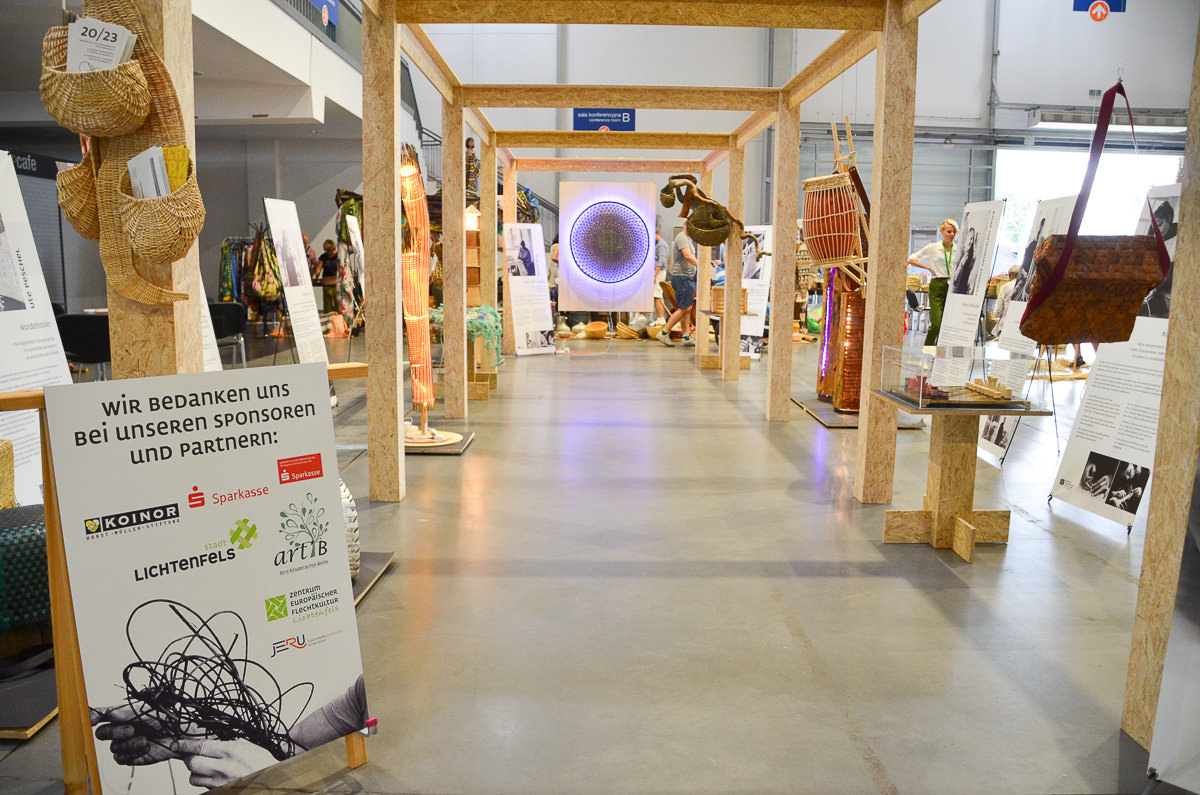
The exhibition made elegant use of a large space,
and this time focused mainly on works created by graduates of the program.
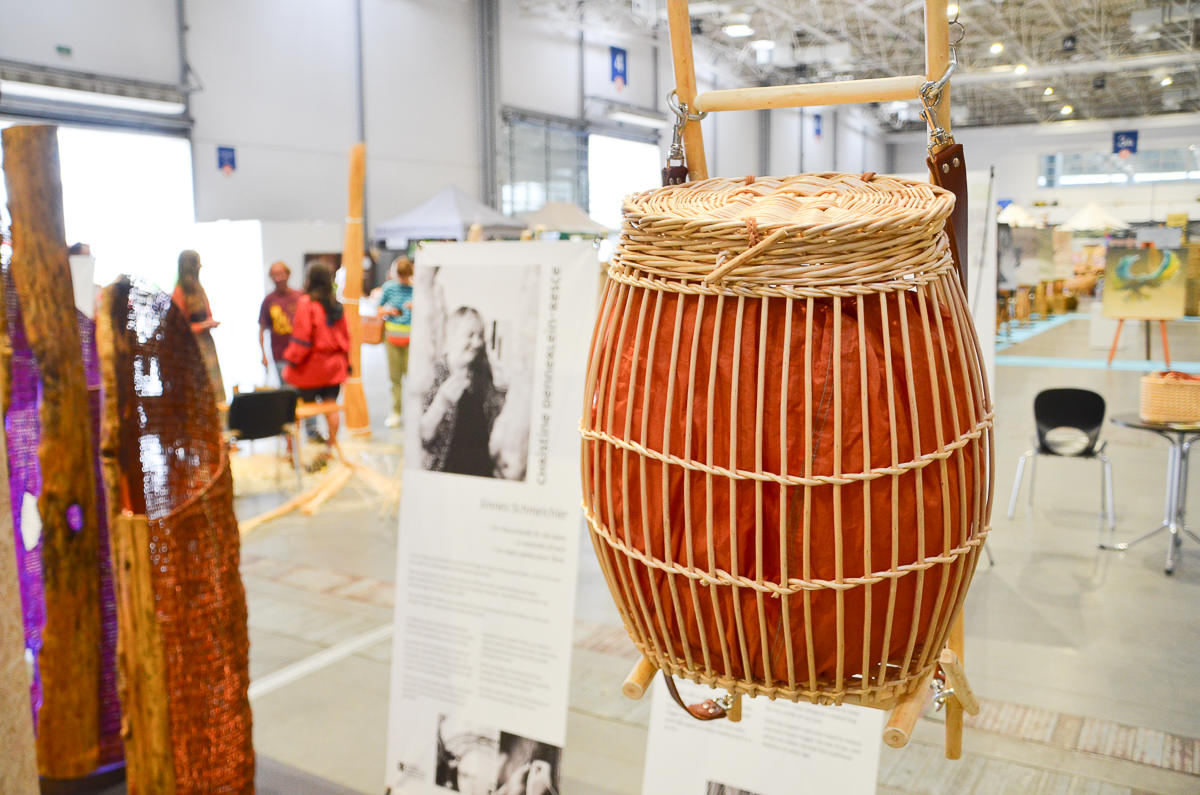
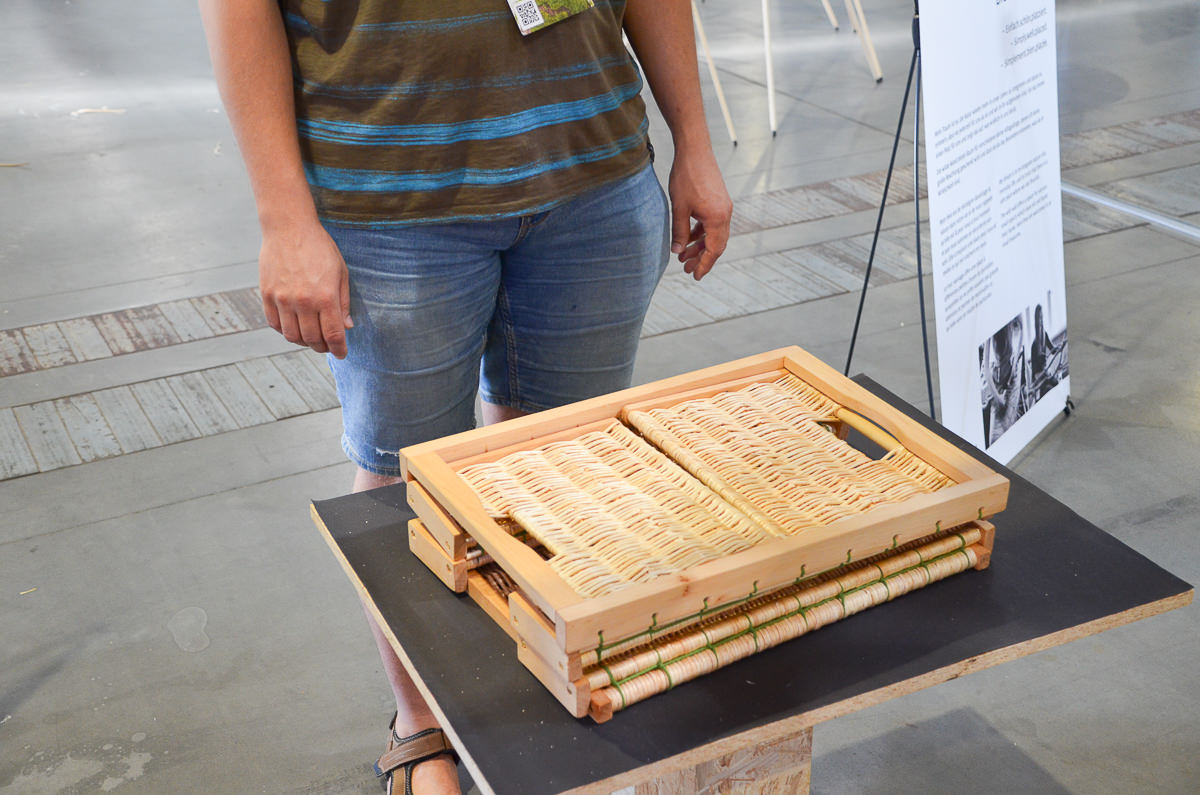
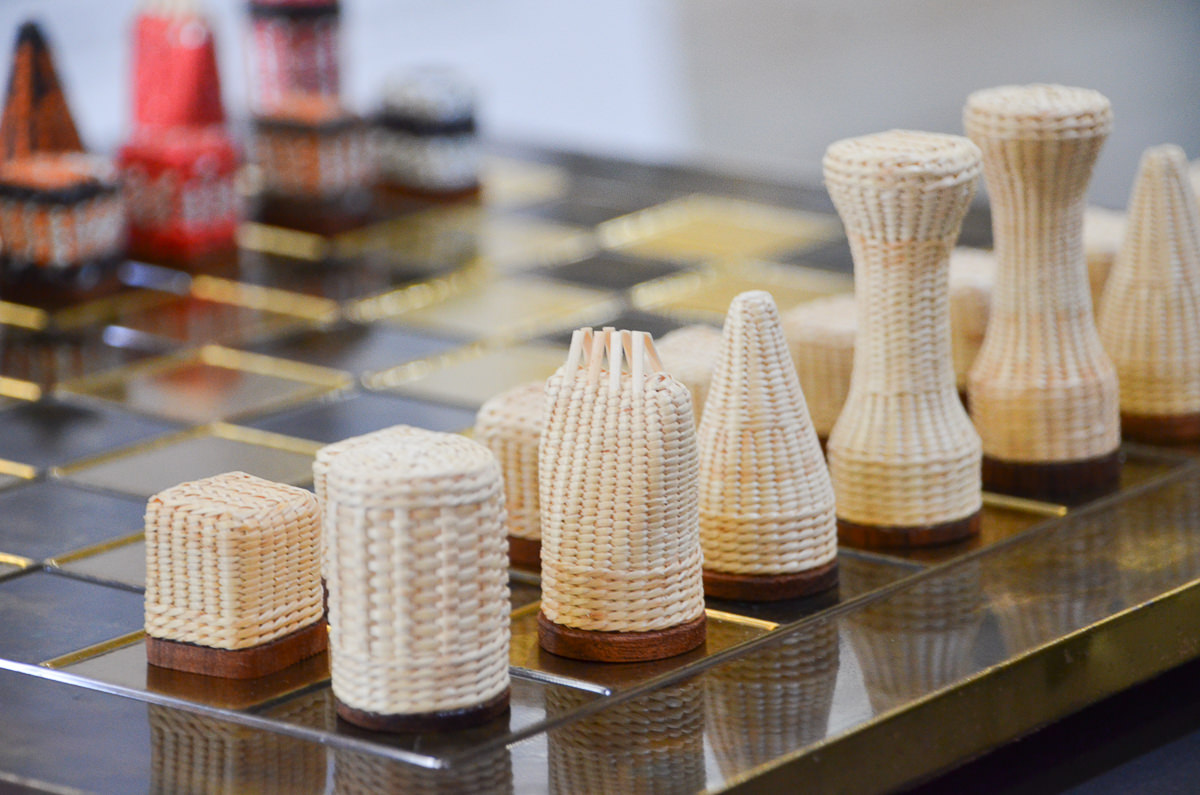
  • A backpack woven in willow.
  • A foldable crate reimagined in willow and wood.
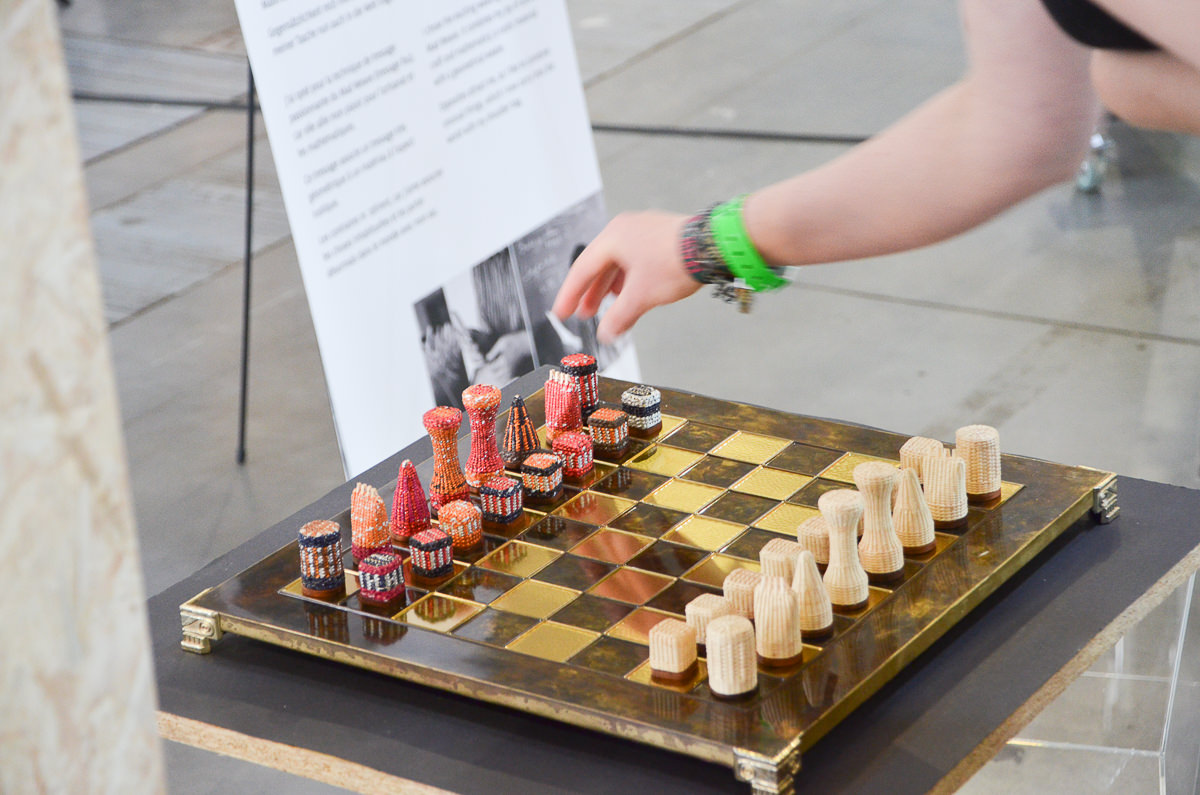
  • Even a chess set, woven by hand.
  • Finely woven with remarkable precision.
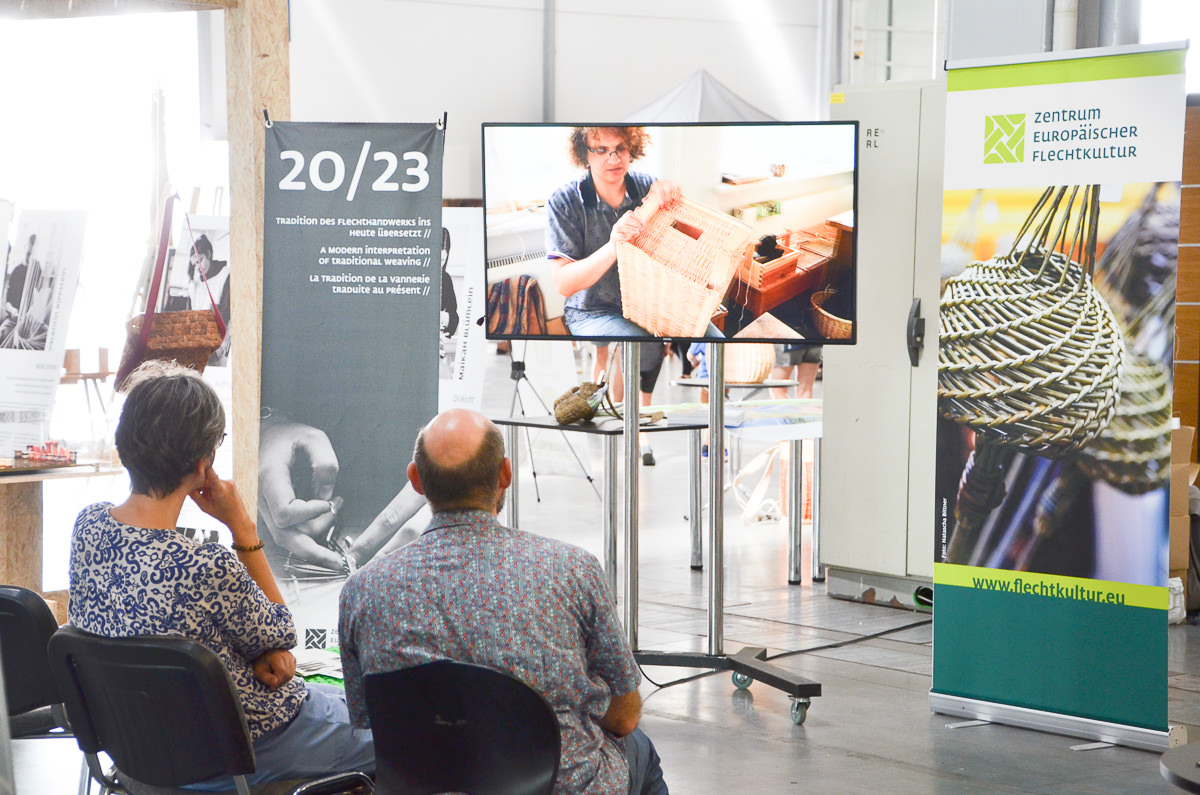
  • The exhibition was richly composed, featuring video footage of the training facility,
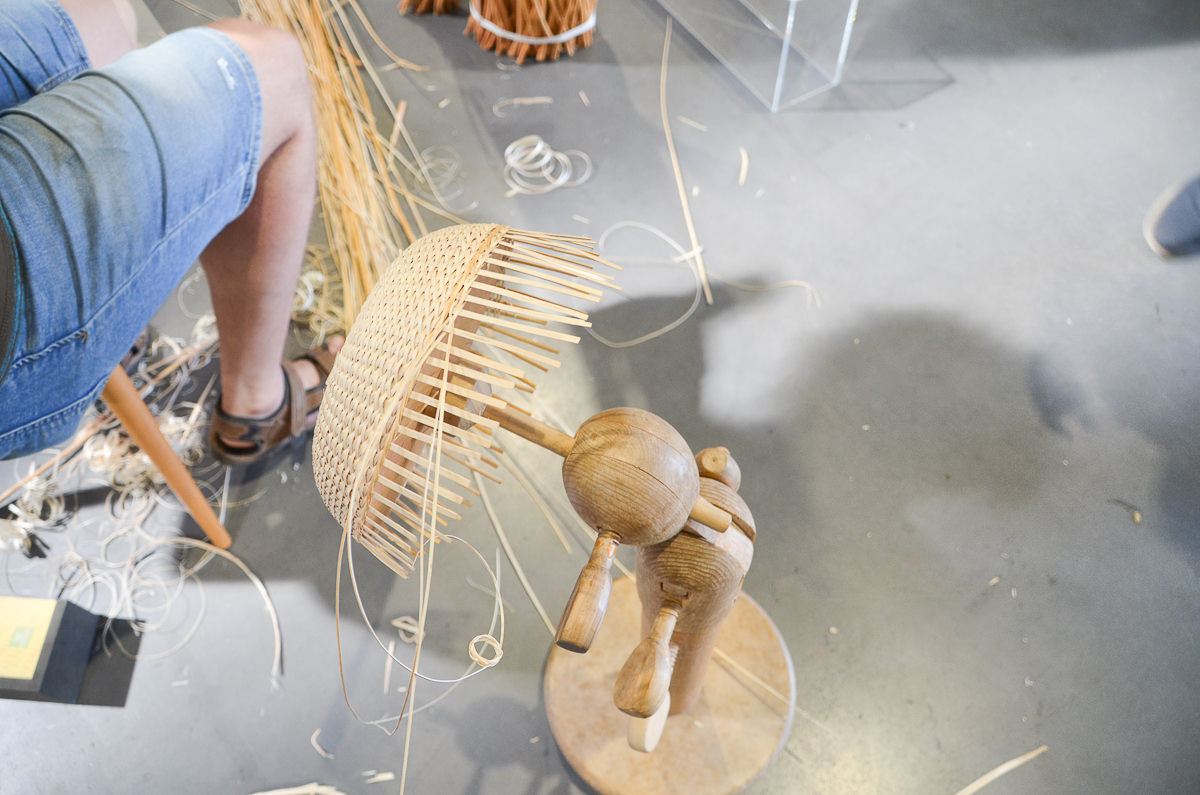
  • live demonstrations by graduates, and displays of the tools used in basket making.
  • The tools used to weave baskets like these are also carefully and solidly made—perhaps something that can be described as distinctly German.
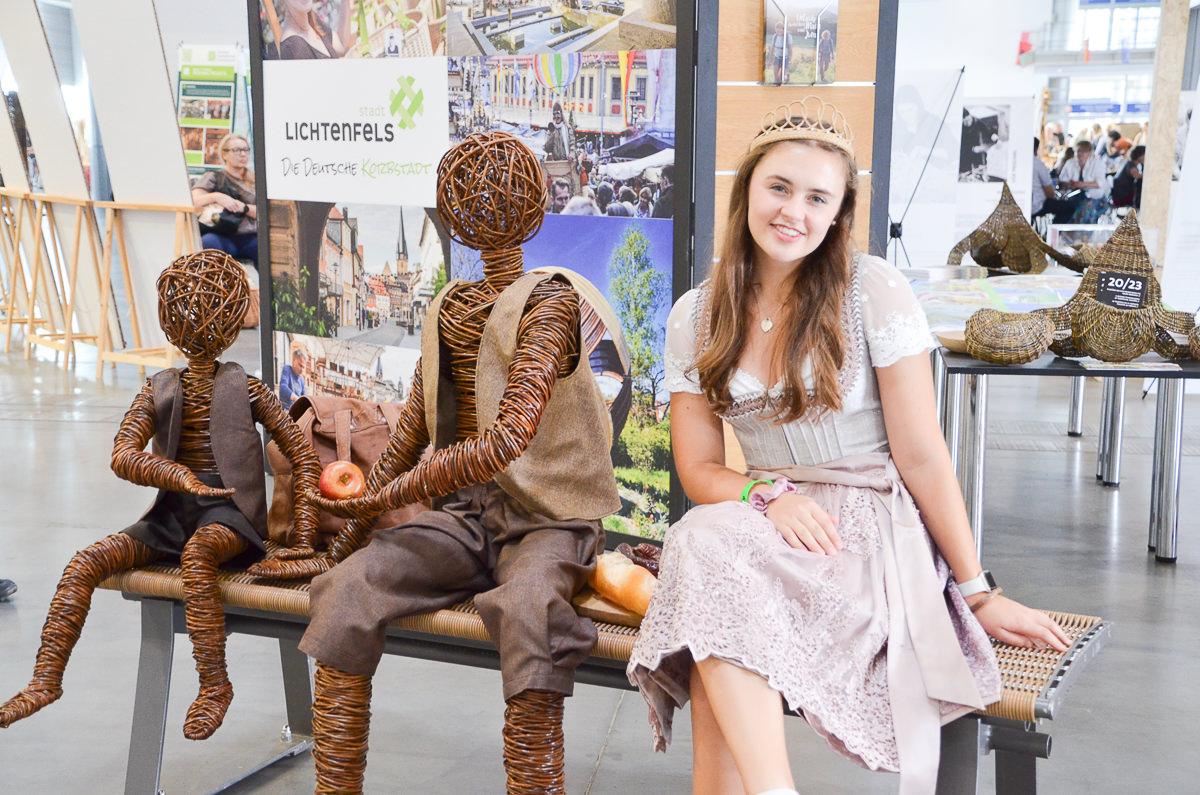
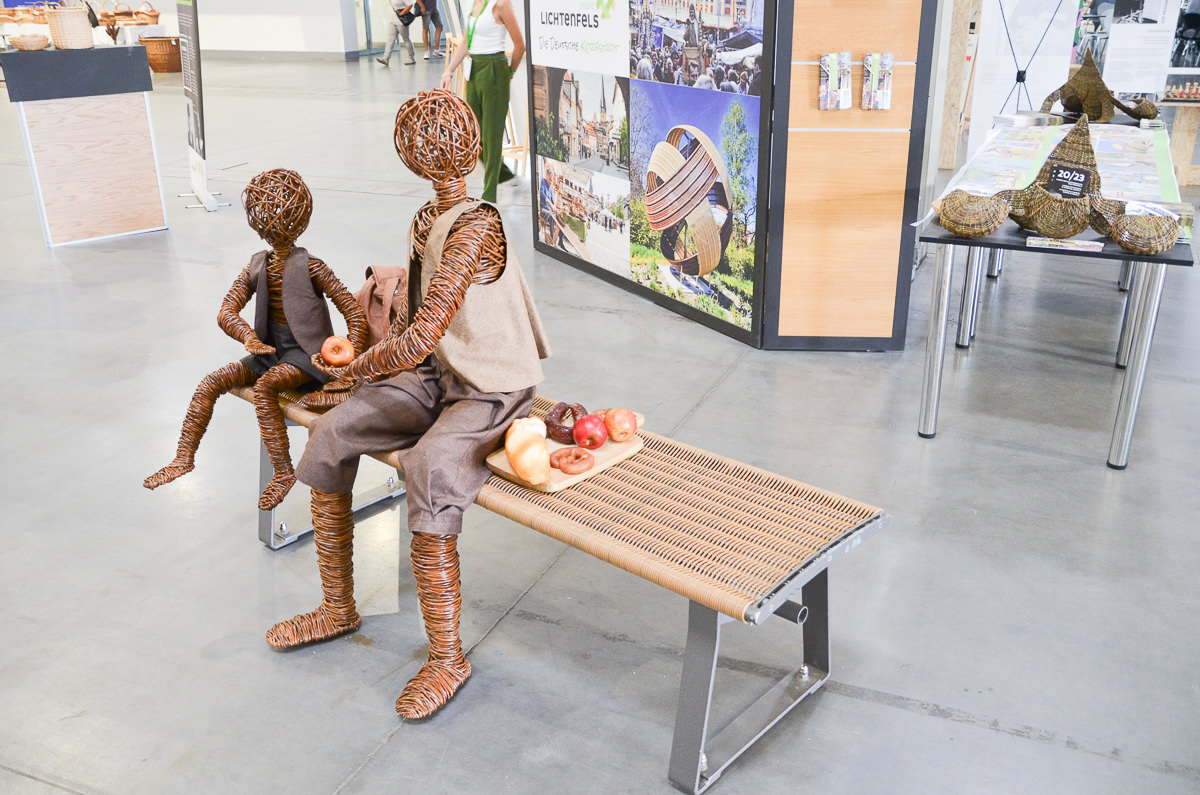
  • The “Basket Queen” was also present at the venue as part of the promotion. The figure beside her is another basketry work, woven entirely from willow.

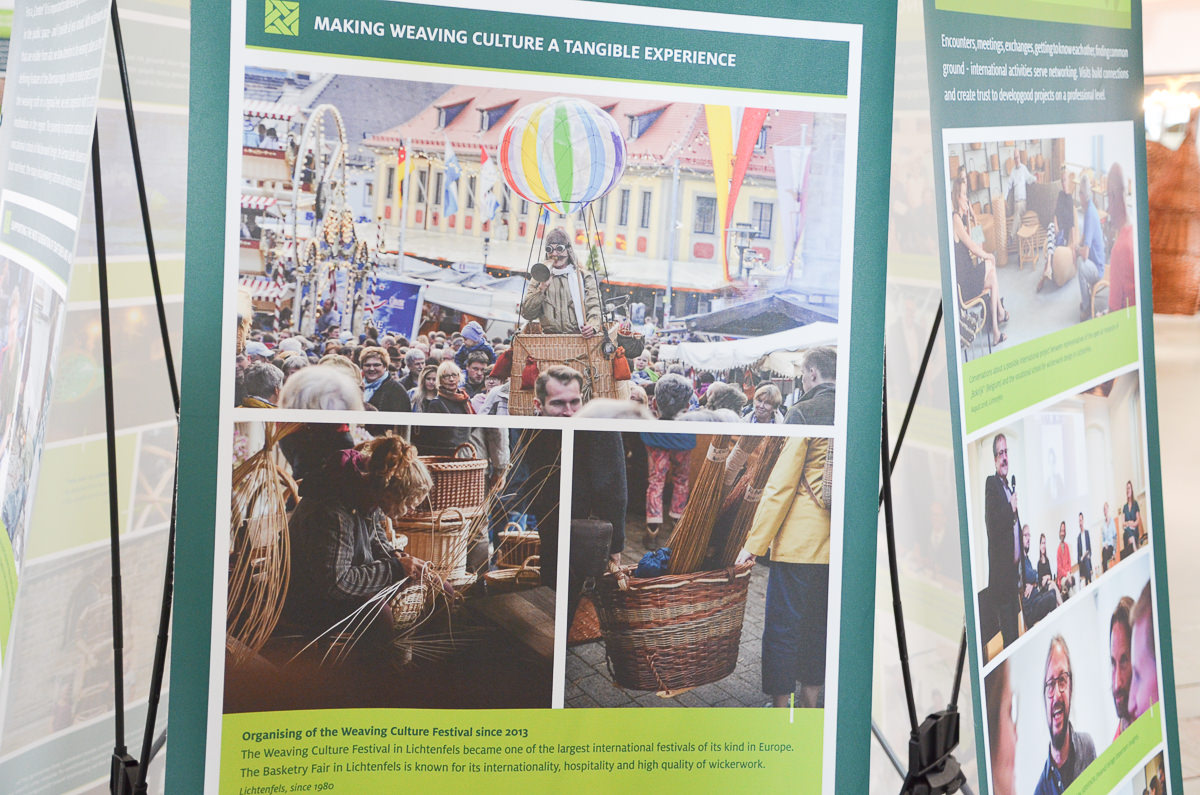
In Germany, there is a town called Lichtenfels, often referred to as a “town of basketry.”
A basketry festival is held there every autumn, and the basketry training school is also located in this town.
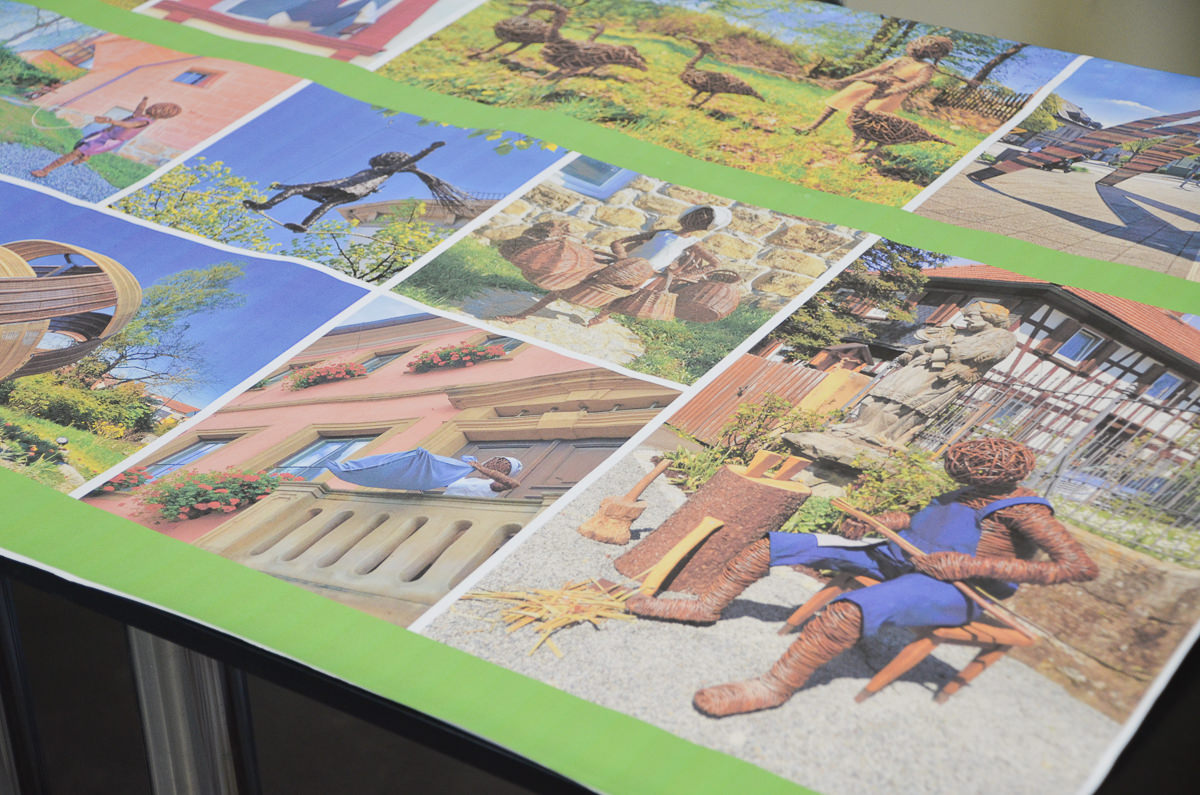
  • Because it is originally a town known for basketry, the entire town becomes even more immersed in basket crafts during the festival season.
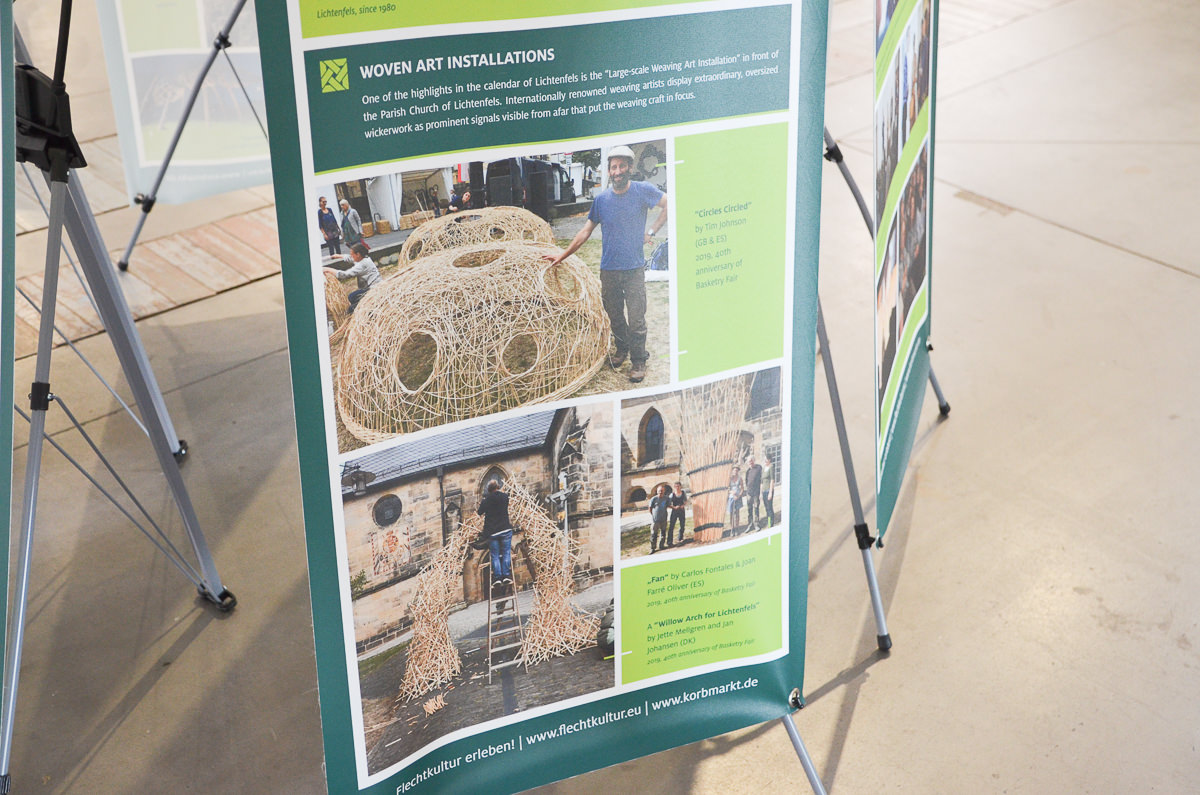
  • During the festival, woven installations appear throughout the town, and makers give live demonstrations, creating several joyful days—we would very much like to visit someday.
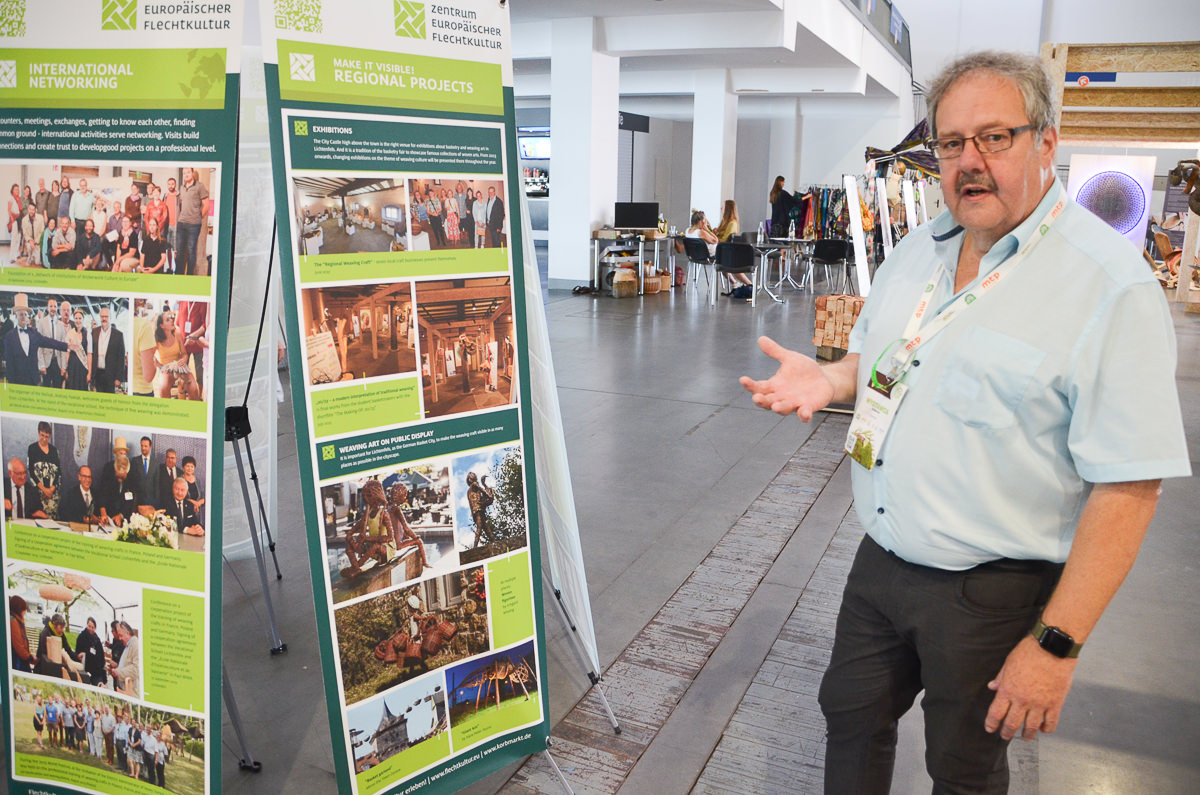
This is Manfred, one of the central figures behind the Lichtenfels basket festival, who kindly took the time to explain everything to me during this visit.

We were able to spend a long time talking together, as he spoke with great passion about basketry.

He shared many things with me, including:

– That the history of the Lichtenfels festival is very long, said to date back 400 or even 500 years.
– That in Germany, it is possible to study willow basket making at a training facility for three years, but very few graduates are actually able to make a living from it.
– That these facilities do not include business or management-related education needed after graduation.
– That because the three-year program is funded by public taxes, he feels it is deeply regrettable that skills so carefully learned cannot be sustained as a profession.
– That unfortunately, in present-day Germany, shops that purchase and sell handmade baskets have largely disappeared.
– That most graduates now rely on craft markets held in various places, as well as sales through social media and personal websites, as their primary sales channels.

Hearing this left me with very mixed feelings.
In terms of sales and livelihood, the situation felt similar to that in Japan—or perhaps even more severe.

No matter how skilled a maker may be, and no matter how well a basket is made,
the reality is that there may be no stable place to sell it.
Situations like the COVID pandemic, where craft markets were unable to take place for several years, can and do happen.

In our time, makers can, on one hand, sell independently using social media and their own websites.
At the same time, we believe it is also reasonable—and important—for makers and sellers to work together
to bring these works to customers.
In Germany, however, it seems that the people who take on the role of “seller” have largely disappeared.

This is not something distant from us.
Our own shop was originally meant to close with the previous generation,
and it is possible that we might have found ourselves in a similar situation.

Manfred and others feel a strong sense of urgency about this reality,
and he told us that they are now planning to open a shop where such basketry can once again be sold.

At the same time, he said that shops like ours—specialized in basketry,
building relationships with makers both in Japan and abroad,
and introducing their work to customers—are something truly valuable.

We ourselves are usually too busy, working day by day without much time to reflect.
But hearing this perspective from someone in Germany allowed us to see our own position more clearly,
and to recognize it anew.
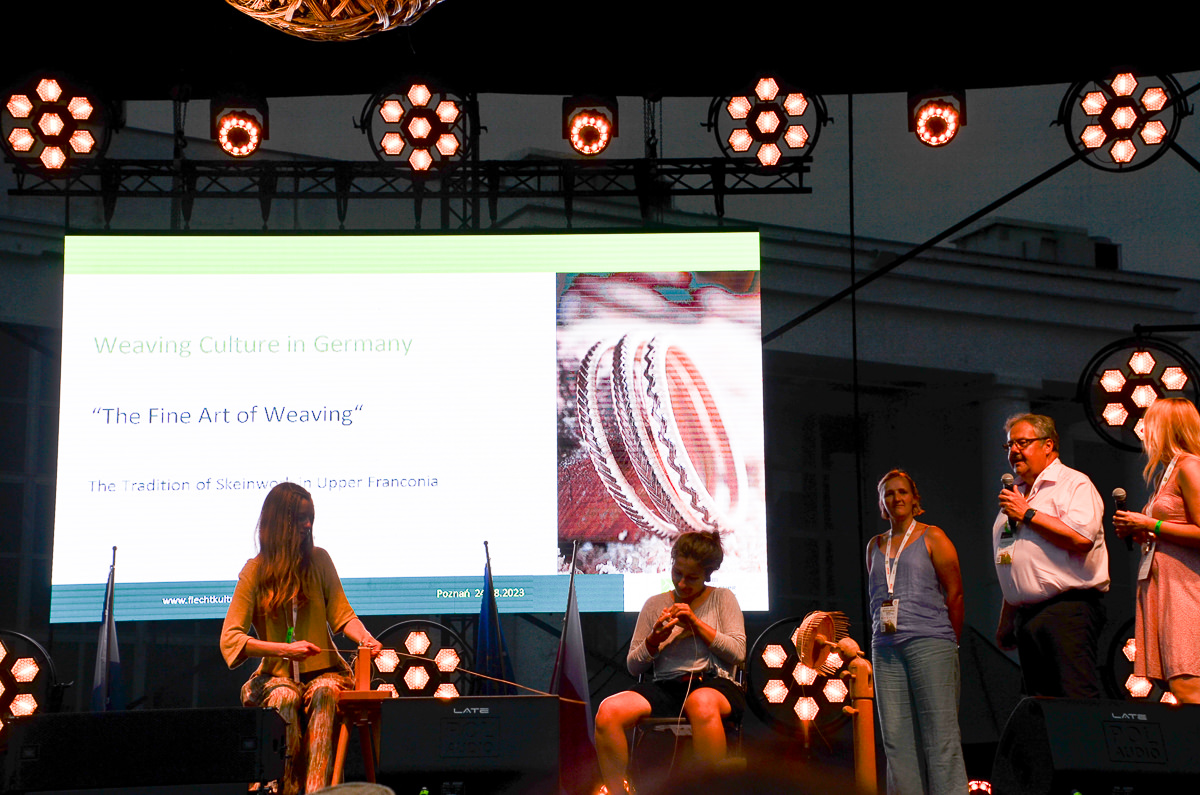
In the evenings, the German team also gave presentations, with graduates demonstrating their basket-making techniques as they spoke.

This time, we were truly grateful for the opportunity to exchange views and share the current situation with Manfred,
the makers who participated in the festival, and graduates of the training facility,
as well as many other members of the German basketry community.

In Germany, as in Japan, there are many people who aspire to basket making.
Yet the question of whether it is possible to make basketry a livelihood remains a very difficult one.
This is a challenge we share across borders.

What we can do, however, is quite simple.
Regardless of national boundaries, we look with our own eyes, touch and examine the work ourselves,
and when we find baskets that truly resonate with us,
we continue to introduce them to our customers.

Little by little, we hope to be able to share the baskets made by German makers with you as well.
Tomotake Ichikawa

+++++++++++++++++++

To be continued


Back to Journal
Invalid password
Enter

Subscribe to “One Basket Letter”

Latest arrivals, restocks, and exhibitions.

Receive a 10% off coupon with your subscription.

TOP

OPEN

アクセス・店舗情報

市川籠店 / 1basketry
〒116-0003 東京都荒川区南千住2-28-8
電話番号 03-3801-5898

店舗営業日:木・金・土曜日(月1回日曜営業)
営業時間:11:00〜16:00
※月〜水曜は店舗は休業ですが、お電話でのお問い合わせは承っております。

Googlemapはこちら

Store Information

1basketry / 市川籠店 – Ichikawa Basketry Store (est. 1907)
Phone: (+81)3-3801-5898
Email: info@1basketry.jp
2-28-8,Minami-senju, Arakawa, Tokyo, 116-0003, Japan

Googlemap

市川籠店 | 1basketry

  • Search
  • Shipping & Payment
  • Return & Refund Policy
  • Privacy Policy
  • Terms of Service
  • Contact
  • Legal Notice
  • Facebook
  • Instagram
  • YouTube
  • TikTok
  • Twitter
  • Pinterest

© 2026, 市川籠店 | 1basketry

  • Choosing a selection results in a full page refresh.
  • Opens in a new window.