
In Tokyo, the scent of fresh green leaves slowly gives way to early summer.
We asked a craftsperson in Iwate who works with sawagurumi bark to allow us to accompany them on a material-gathering trip, and were kindly invited to join.
For those who work with bamboo or sasa bamboo, material gathering usually takes place after the sap has settled—
from autumn, when the material tightens, until the first snowfall.
In contrast, the best season for harvesting walnut bark or mountain grape vines is from spring through the rainy season,
when the plants are full of moisture.
It seems that bark can still be peeled even in midsummer,
but the heat alone is enough to sap one’s motivation.
With grasses growing thick all around, the work becomes a matter of pushing through overgrowth,
highly inefficient and physically exhausting.
In the early summer mountains of Iwate, driving with the windows open,
the wind felt cool against the skin—even while wearing a long-sleeved hoodie.
It struck me as just the right season for outdoor work like gathering materials.
We met Mr. Toshio Sasaki at the station shortly after nine in the morning,
were offered a ride, and drove for about an hour.
We then headed toward the material-gathering site that had been carefully scouted in advance.

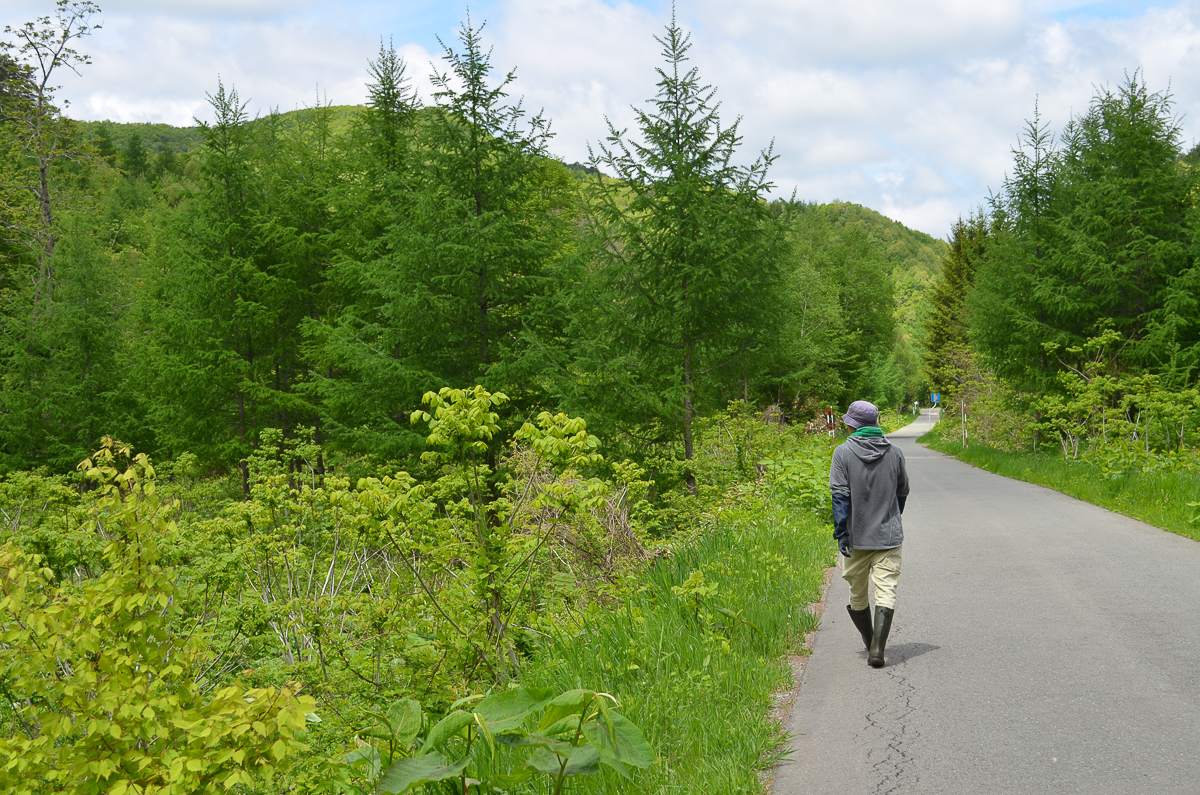
After about forty minutes, we were driving through a stretch of road lined with forest on both sides.
There were hardly any houses left, and the road gradually grew narrower.
Beside the road, a small stream shifted its course again and again,
crossing beneath the road many times.
It was a river shaped not by human hands,
but by the quiet course of nature itself.
“Oh—this one is sawagurumi as well.”
Each time, the voice came from the driver’s seat,
pointing it out as we passed.
At first, though, I couldn’t tell at all which tree was which.
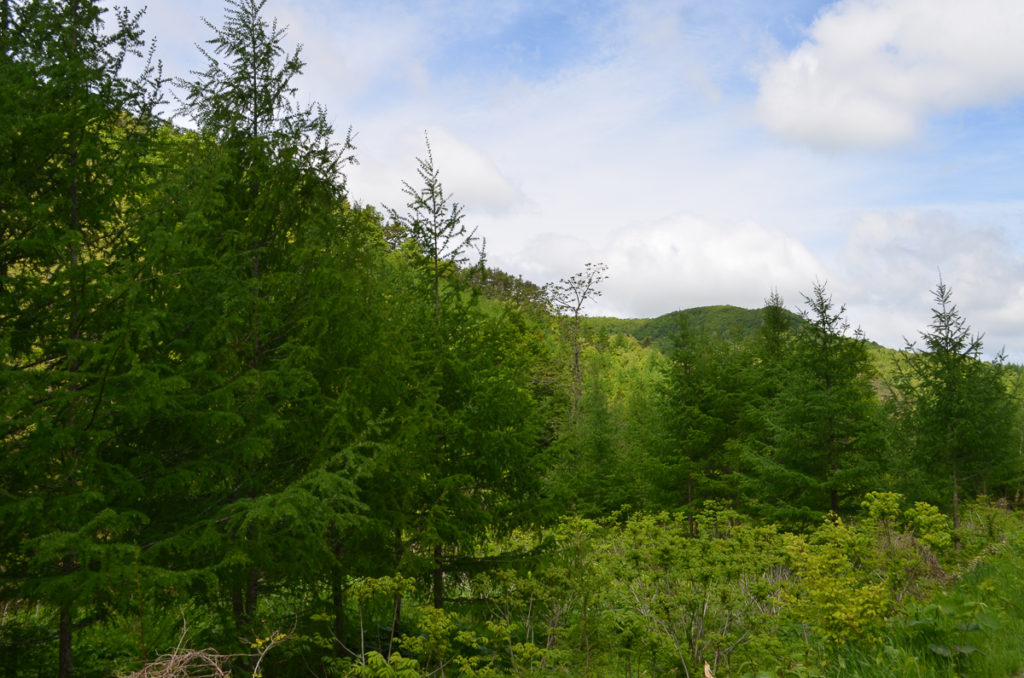
But after having it pointed out a few times, something suddenly caught my attention.
“So close.”
The distance between the riverside road we were traveling on
and the places where sawagurumi trees were growing
was remarkably small.
The word “sawagurumi.”
Written in kanji, it is 沢胡桃—literally, “stream walnut.”
There is also yamagurumi, the mountain walnut,
but this one belongs to the stream.
It made sense.
Sawagurumi nuts use the flow of these small streams—
the very streams crossing beneath the road again and again—
to carry their seeds to new places.
As I looked back at the scenery,
seeing sawagurumi trees standing right beside the water,
I found myself saying out loud,
“Oh, I see—that’s how it works.”
Unlike mountain walnuts, sawagurumi nuts are generally not eaten,
which makes the role of the stream all the more essential.
I had used the word “sawagurumi” countless times
when explaining things to customers,
but in that moment, its true meaning clicked into place.
Coming here, seeing it unfold right in front of me,
brought instant clarity.
It was deeply instructive.
Lost in these thoughts,
I noticed the car gradually slowing down.
“This—this is paradise,” he said.
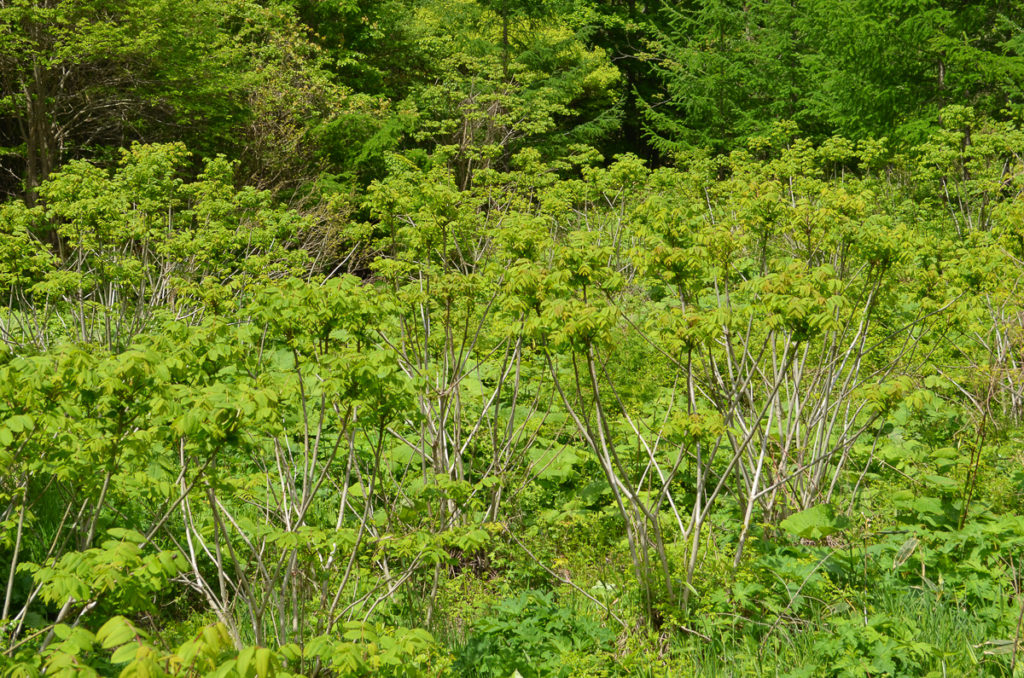
He spoke those words with genuine delight,
his voice carrying a hint of excitement,
and pulled the car over to a spot where it wouldn’t be in the way.
From there, as far as the eye could see,
young sawagurumi trees were standing densely together.
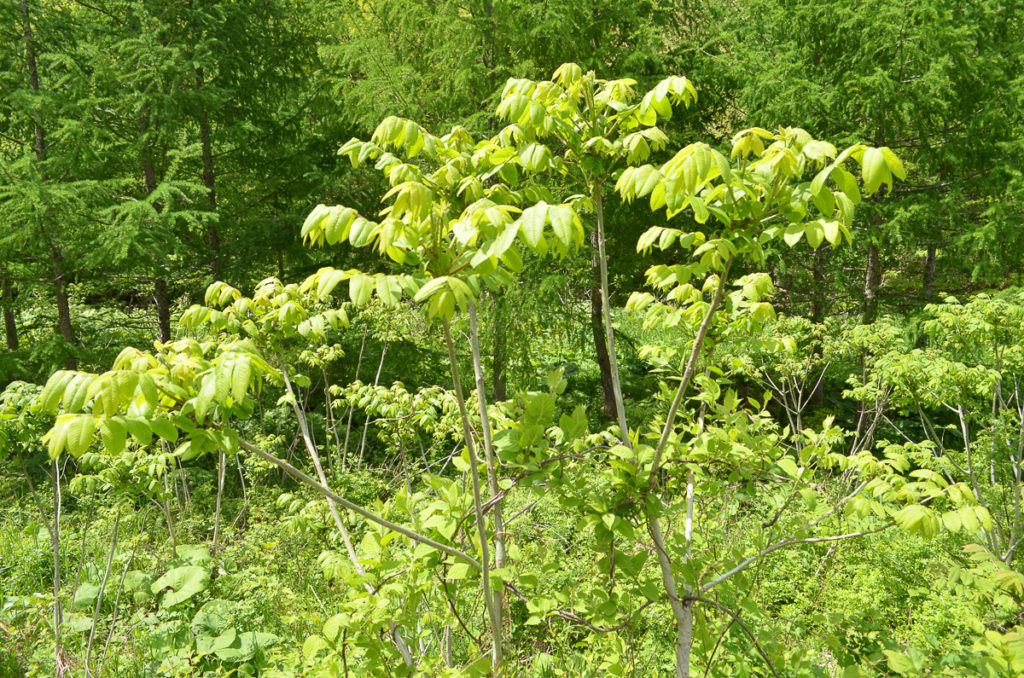
For sawagurumi basketry, branches that are two to three years old are most often used.
When pale green leaves begin to appear at the tips,
it is a sign that the bark is ready to be peeled.
To be honest, when I first heard “sawagurumi bark,”
I imagined peeling bark from a large, thick tree.
In reality, however,
the process involves cutting relatively young, slender branches.
With that,
let’s begin the gathering of sawagurumi materials.
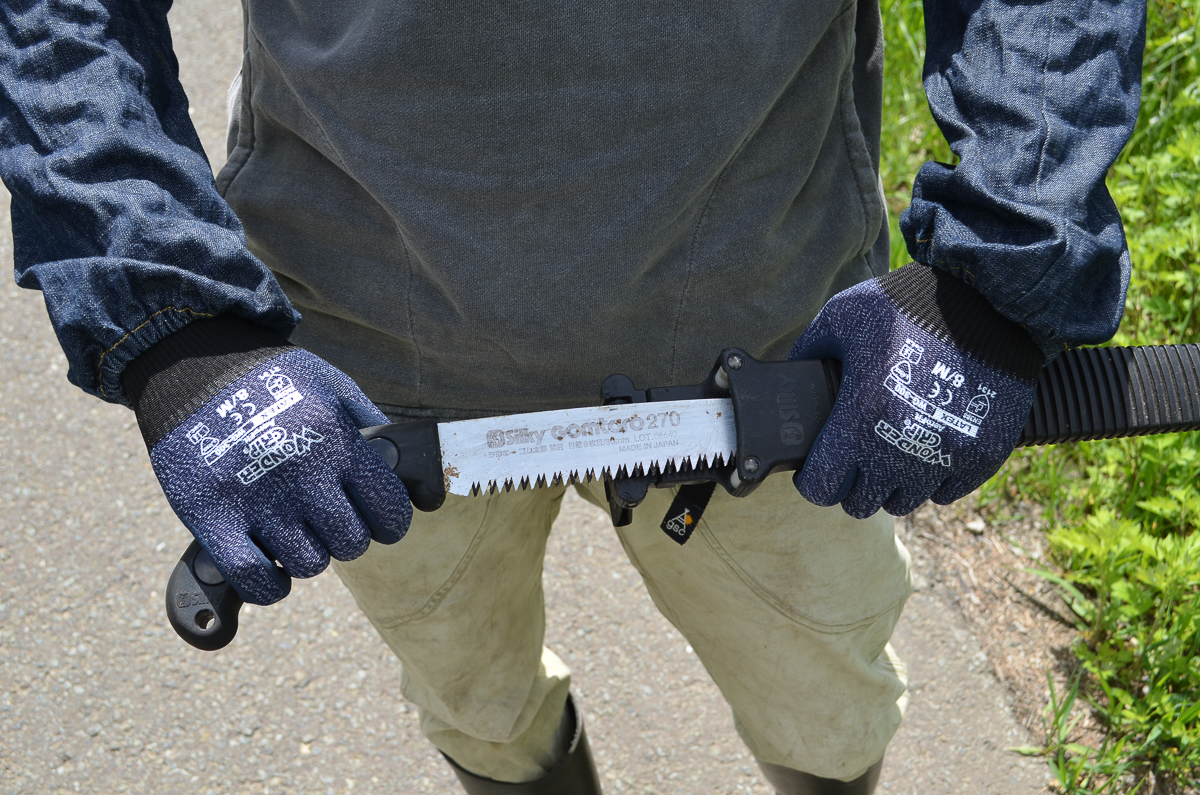
For gathering materials, this single saw is all that is used. 
Sawagurumi grows in clumps like this. 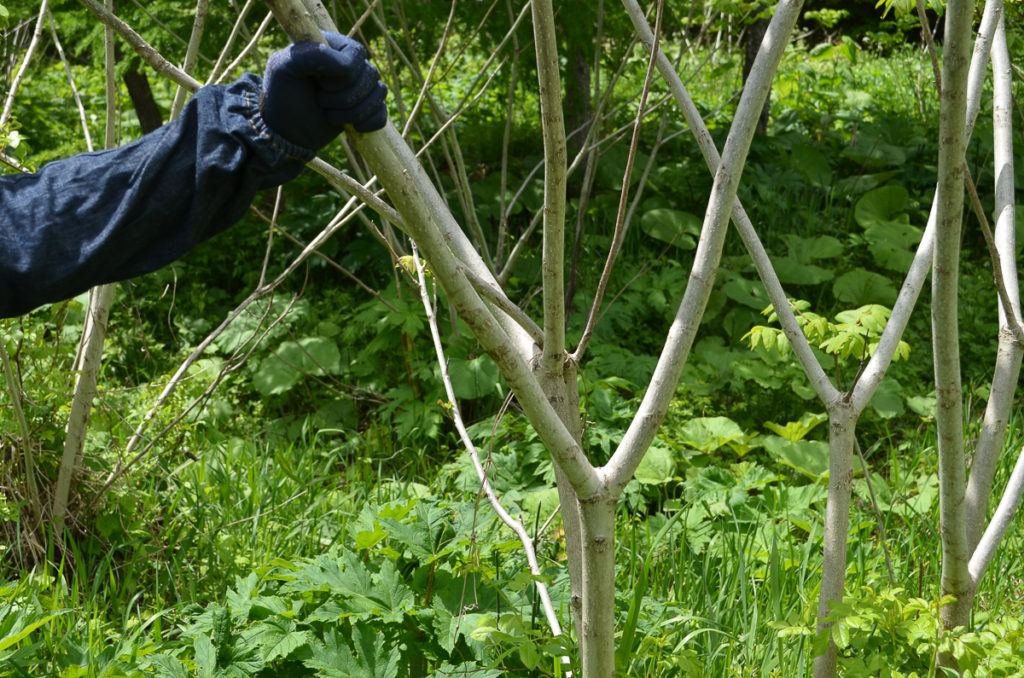
Along the way, the branches continue to split like this. 
From each clump, not all branches are taken—only two or three are cut. 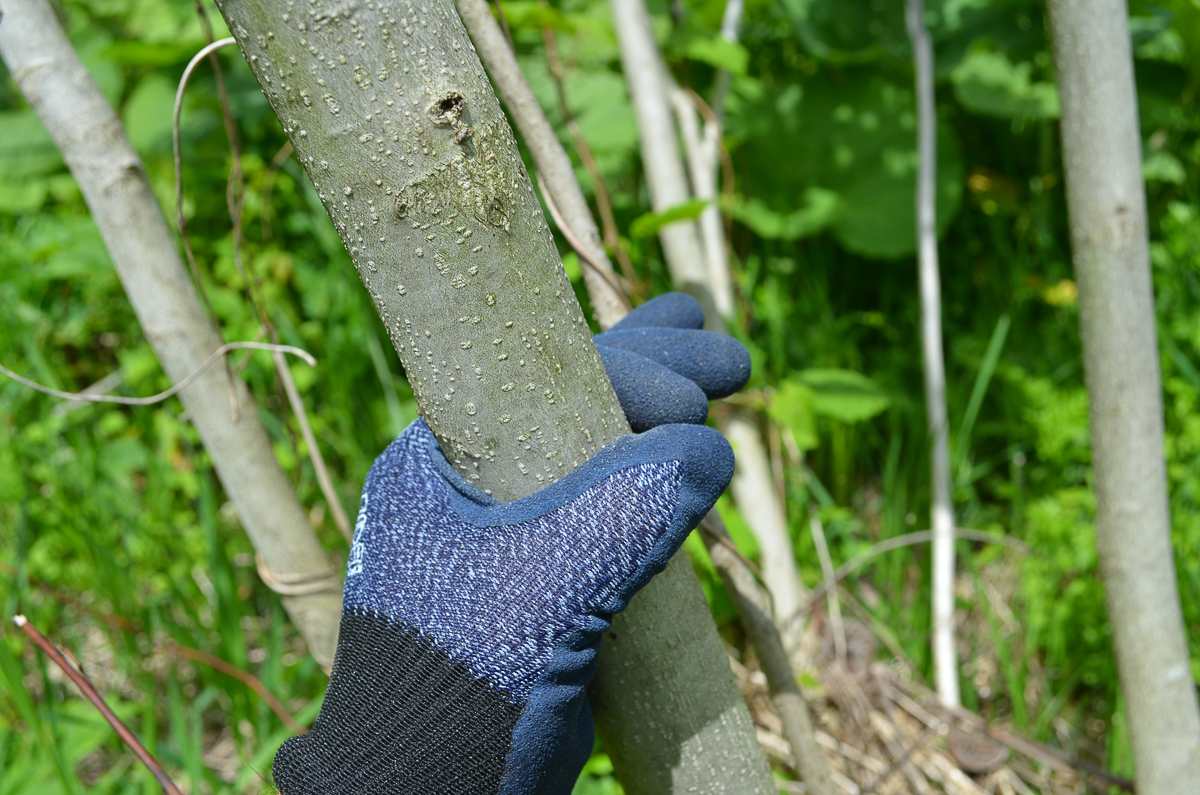
The guideline for cutting is a thickness that can be grasped comfortably by an adult hand. 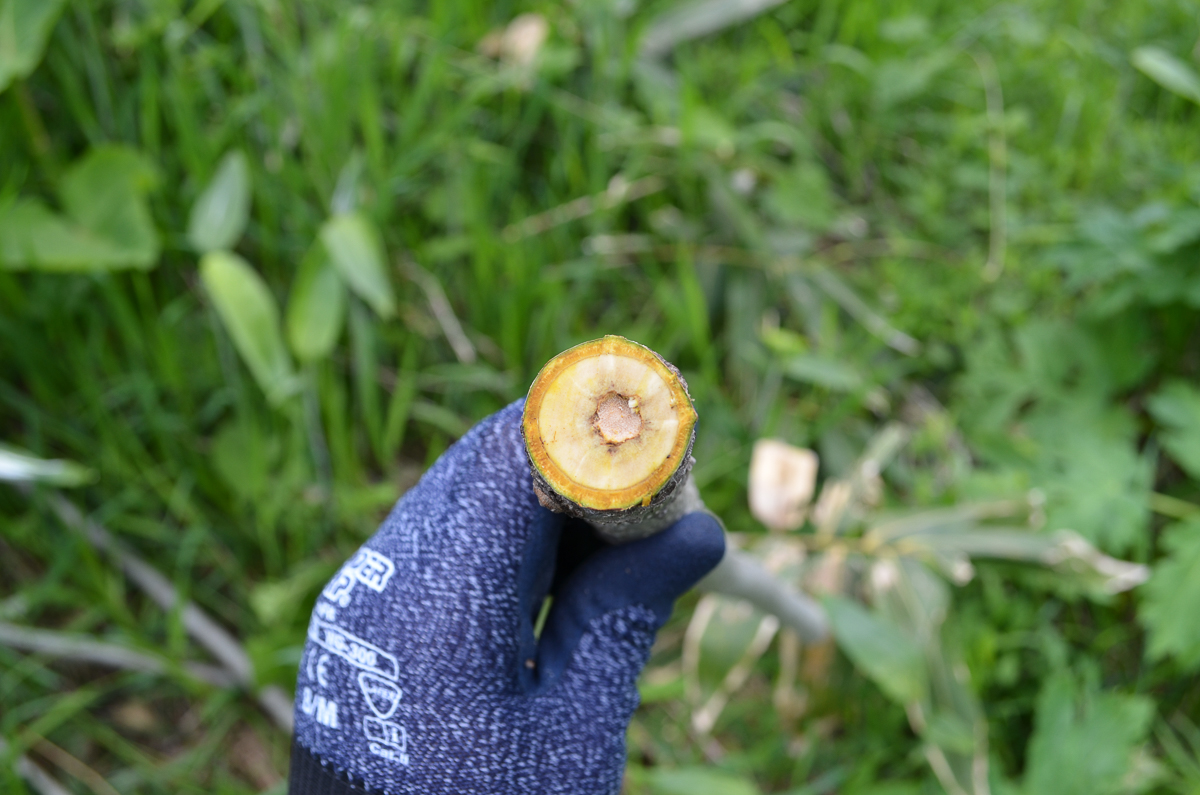
The cross section of a cut branch. The bark, the core, and the central part that absorbs moisture can be clearly seen. 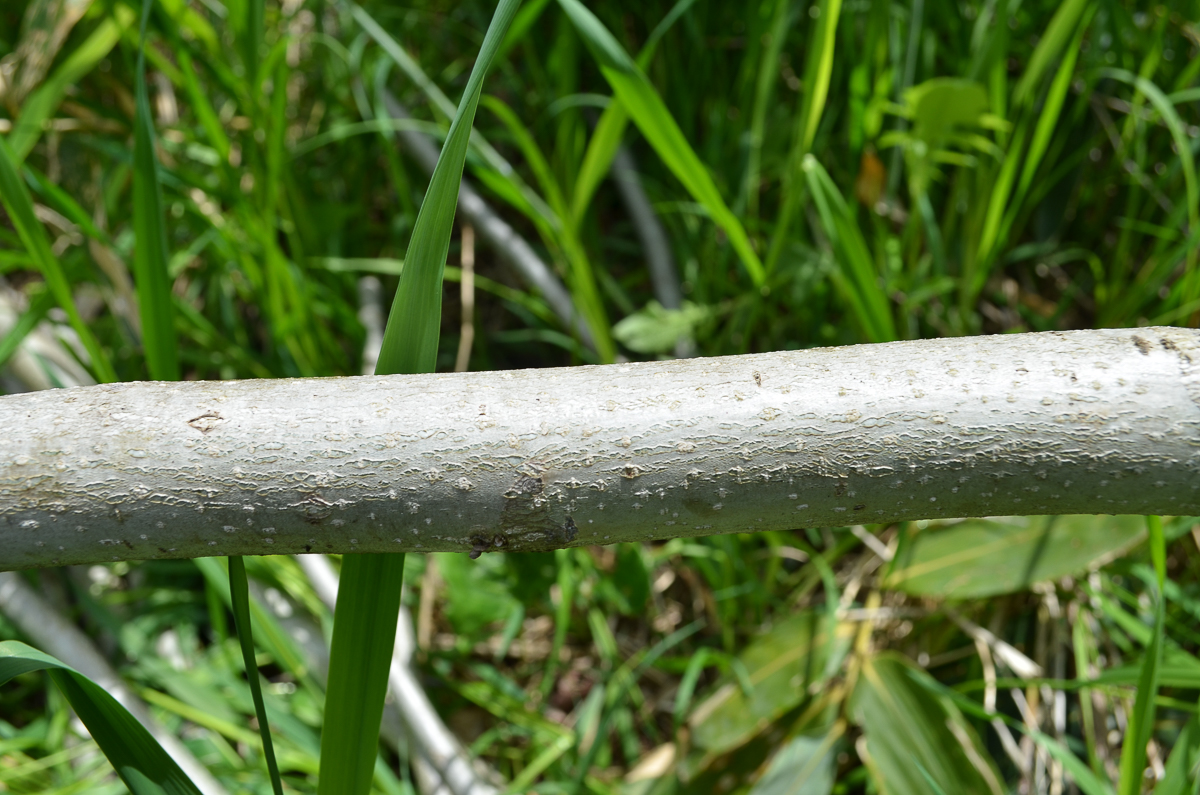
Freshly cut sawagurumi branches shimmer silver when they catch the sunlight. 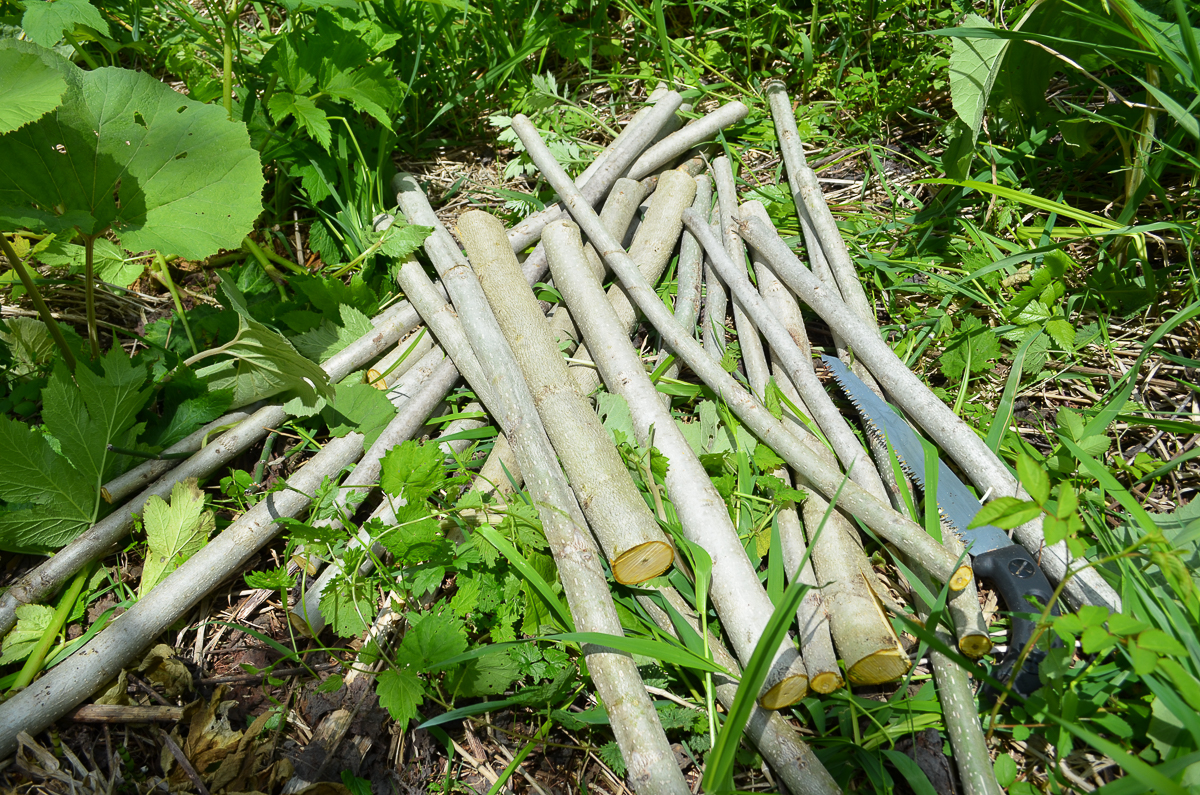
The cut branches are gathered together in one place. 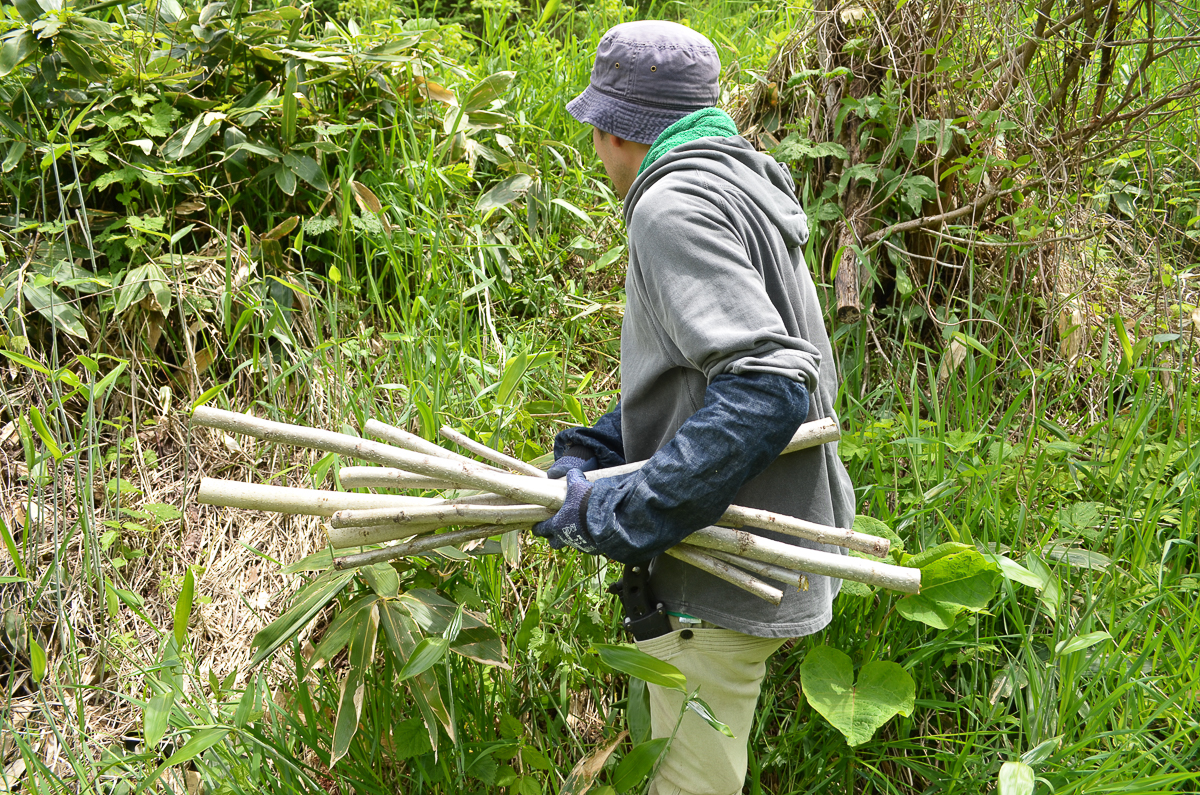
Once a sufficient number has been gathered, they are carried back toward the car. 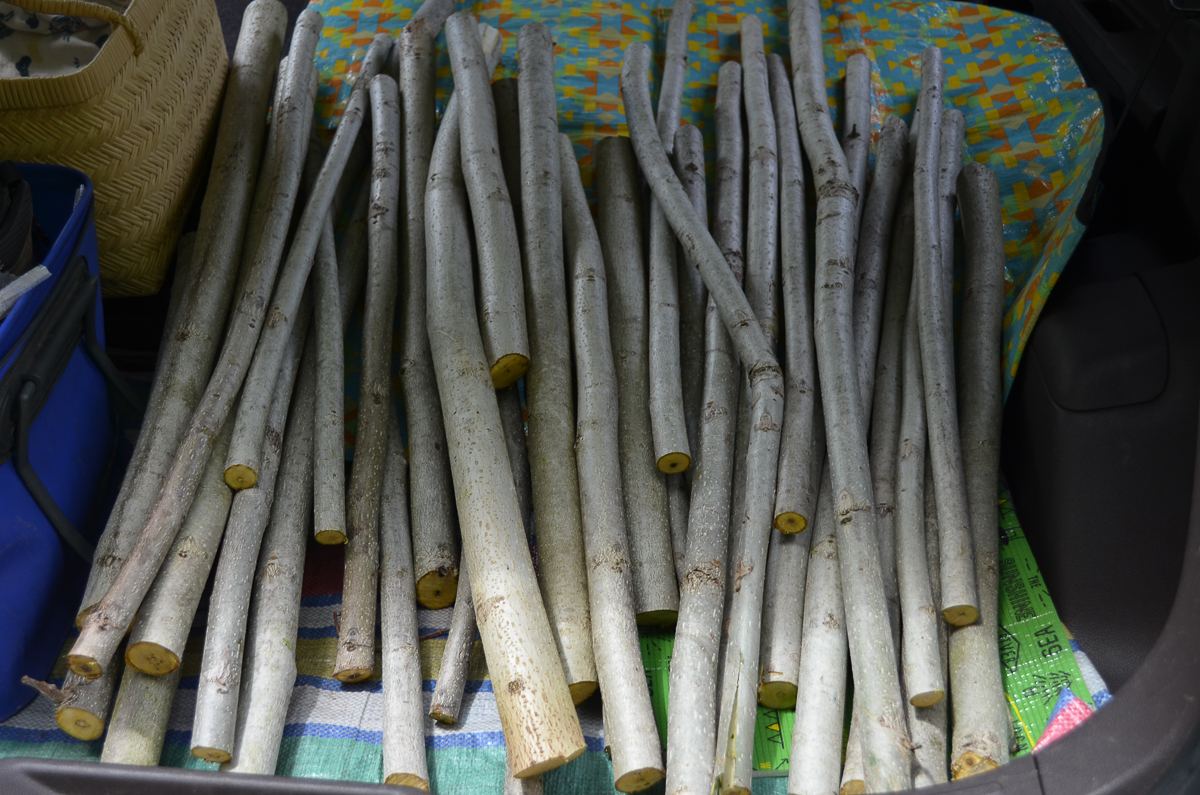
A daily target is set, and for this day, the goal was eighty branches. 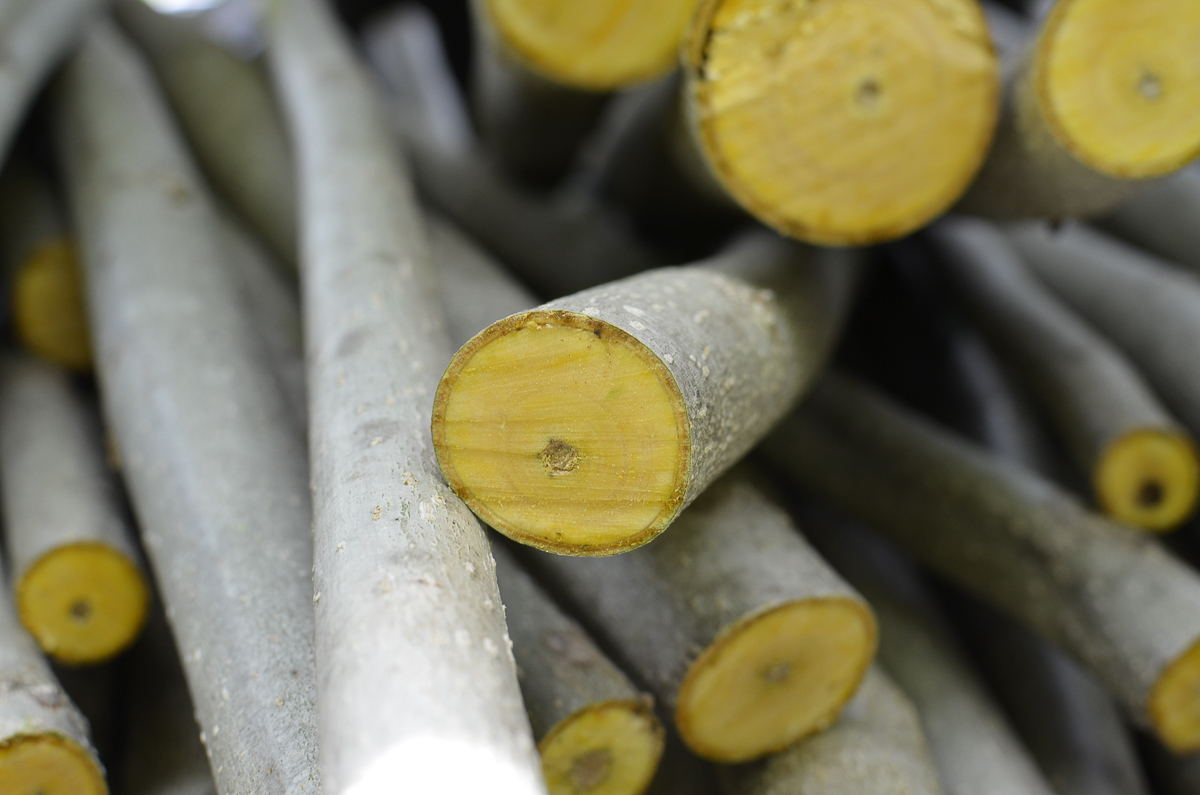
Branches of various thicknesses and shapes are laid out together. 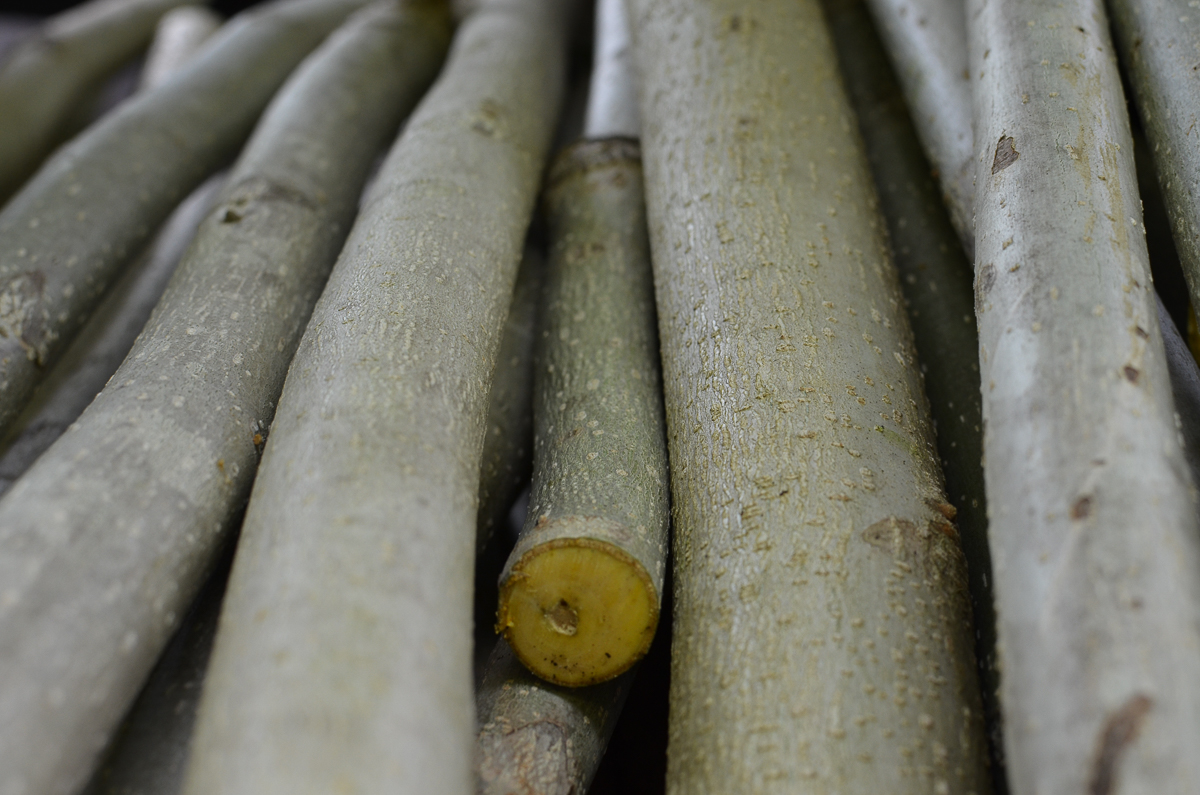
The color of the outer bark felt truly beautiful.
In this way, we spent hours gathering materials in this “paradise.”
While taking photographs, I was also able to lend a small hand.
The sensation of cutting young trees with a saw,
the resistance felt through the blade,
still remains in my hands.
At times, the wood—so full of moisture—
would grip the blade and refuse to let go.
Looking at the young branches gathered to meet the day’s target,
I watched him take a quiet break, clearly satisfied.
Standing behind him, I felt a sense of relief as well.
Tomotake Ichikawa
+++++++++++++++++++++++++++++++++++++
The works made using sawagurumi introduced in this journal are available in our online shop.
You can view them here.
This journal continues in
“Gathering Materials — Sawagurumi Bark from Iwate, Part 2.”